Mocha Chiffon Cake (Gourmeted Goldilocks Recipe)

IMG_0357

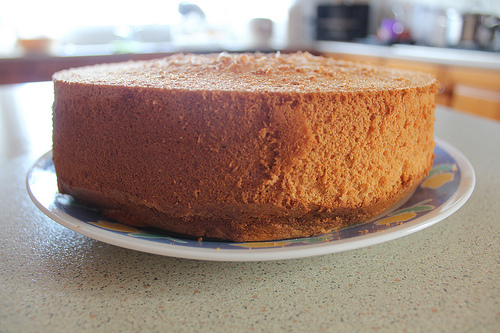
I was searching high and low for a nice looking Mocha Cake to bake for my mother. I came across Gourmeted’s Goldilocks Mocha Cake Recipe which looked fantastic. I’ve tried this a few times following the exact method however on both occasions my cake sank like a rock. One my third attempt I thought, why not use the tried and tested Chiffon Cake way. Here is my slightly adapted Gourmeted recipe below. A big thanks to Gourmeted because it’s a fantastic recipe.

Mocha Cake ala  Goldilocks (Gourmeted)
Ingredients

For the Cake:
6 large egg yolks, at room temperature
1 cup sugar
1 teaspoon coffee/espresso granules [Nescafe instant coffee recommended]
1 teaspoon cocoa powder
1 teaspoon vanilla
1 teaspoon water
½ cup canola oil
1 cup cake flour
1 teaspoon baking powder

6 egg whites, at room temperature
1 teaspoon cream of tartar

For the Mocha Buttercream
1 cup sugar
4 large egg whites, at room temperature
3 sticks (12 ounces) unsalted butter, soft, at room temperature
1 teaspoon coffee/espresso granules
1 teaspoon cocoa powder
5 teaspoons water
1 teaspoon vanilla extract
5 teaspoons amaretto (Or Kahlua)
Tools & Equipment

Stand mixer (preferred) but a hand mixer will be sufficient
1 Chiffon cake baking tin

Preparation

1. For the Cake: Preheat oven to 375°F (~160 C)

2. Whisk together egg yolks and sugar in a large bowl (or bowl of a stand mixer) over low, then medium speed, until creamy and light yellow in color.

3. Dissolve espresso or coffee granules and cocoa powder in water and vanilla in a small bowl, getting rid of lumps while stirring. Pour into the egg-sugar mixture, along with canola oil, and beat until well combined.

4. Remove large bowl from stand mixer (if using one) and sift cake flour and baking powder over it. Stir with a wooden spoon until well blended, scraping the sides of the bowl once.

5. Whisk egg whites and cream of tartar into stiff peaks in a medium bowl, and fold into the mocha batter, a dollop or two first to liquefy the thick batter, and then in thirds.

6. Place the batter in the pan. Bake on two racks for 30 to 40 minutes. The cake is done when the tops become golden brown and the cake tester comes out clean when inserted in the middle.

IMG_0350

7. Once ready, take out of the oven and cool upside down on a mug. If you want to make the icing, the cake must be left to cool completely.

IMG_0353

8. For the Buttercream: Whisk sugar and egg whites for 3 to 5 minutes in a medium heatproof bowl set over a saucepan of simmering water (water should not touch the bottom of the bowl), until meringue is hot to the touch. The sugar granules will be dissolved and you will be left with a fluffy marshmallow cream-like froth.

9. Remove bowl from heat and beat for 5 minutes with a hand mixer set to medium speed, or pour into a bowl of a stand mixer with a whisk attachment to mix.

10. Add half of the butter and beat with a hand mixer (or paddle attachment for stand mixer) until smooth before adding the next half to combine. Scrape the sides of the bowl with a spatula and give it a quick stir. Beat again on medium-high for another 6 to 10 minutes to thicken.

11. Dissolve cocoa and espresso/coffee granules in water, vanilla extract, and amaretto in a small bowl. Pour into the buttercream and beat for 2 minutes, scraping the sides at least once.

12. Spoon about ½ cup of frosting on top and spread it evenly with a flat metal spatula.Spread a thick layer of frosting over the side, working from the bottom up to the top. Frost the top by placing a mound of icing and spreading it to the side. You can decorate the cake with the remaining frosting as you wish.


IMG_0362

As you can see I didn’t do the icing this time around. I have done it previously and it is indeed delicious. I used Kahlua instead of Amaretto but I believe Amaretto gives it a nice almond flavour to it.

IMG_0359

Impressions

This  Mocha cake… I’m just going to call it a Mocha Chiffon Cake is beautifully soft. I put it only for roughly 30/35 minutes, just done and it is as moist as ever. If you’re a fan of Chiffon Cakes, and want a slight coffee hit. This is for you! I think if you try the Gourmeted way, you may still find success, it’s just that I used a hand mixer on my previous two attempts. My planetary stand mixer works wonders with egg whites and is excellent in producing stiff peaks so that could be the reason why I found success on my third attempt.

This is slightly smaller than my Orange and Pandan Chiffon Cakes, as it only uses 6 eggs, but it’s still quite nice as you can see. It’s just a tad shorter. I might try a Black Sesame Chiffon Cake sometime because I seriously can’t get enough of Black Sesame.
 

Orange Chiffon Cake

IMG_5914

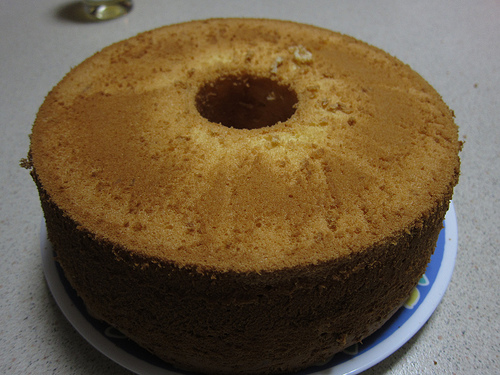
After baking my first Pandan Chiffon Cake, we decided to try baking the Orange Chiffon Cake. Usually Pandan and Orange and they two popular versions in Melbourne. I’m really not sure of many other versions, I’ve seen someone do a Black Sesame one but haven’t had a chance to try that yet.

The difference between the Pandan and Orange Chiffon Cake recipes is the Orange version tastes much lighter because  of the use of coconut milk in the Pandan recipe which makes it slightly more dense. Without further adieu here is my mother’s recipe which works a treat!

Orange Chiffon Cake
Ingredients

8 egg whites
100 g sugar
1/2 tsp cream of tartar

8 egg yolks
60 g sugar

180 g self-raising flour (or 160 g plain flour and 20g cornflour)

1/2 tsp salt
1 1/4 tsp baking powder

120ml vegetable oil/corn oil
80ml orange juice

1 tsp orange extract

Method
1. Preheat oven to 160/170 degrees Celsius.
2. Sieve the flour, salt and baking powder into a medium sized bowl.
3. Add the vegetable oil, orange juice, orange extract, egg yolks and sugar into the dry ingredients and mix until just combined.
4. Whip the egg whites and once it starts to bubble add the cream of tartar.
5. Keep whipping until the mixture is nearing soft peaks, then slowly add the sugar with the electric mixer is still running and until hard peaks form.

IMG_5891
6. Add 1/3 of the meringue into the wet mixture until the thick mixture softens. Then slowly add in the rest of the meringue until just combined. Do not overmix!
7. Pour into the cake pan (one made for upside down cakes – it has a hole in the middle)
8. Place in the oven for 30/40 minutes. If the top of your cake gets brown too quickly, lower the oven temperature to around 150. To see if it’s done, you can use a skewer and poke it through the middle. If it comes out clean, it’s done.

IMG_5898
9. Remove from the oven when done, and flip it upside. If the cake as risen higher than the cake pan’s height, use a mug and rest the middle cylinder on top.

IMG_5940
IMG_5904
10. Allow the cake to cool until room temperature.

IMG_5916

Here’s how it looks inside!

IMG_5951

I find that you’ll always have a slight depression and density at the bottom because of the meringue cooling. You’ll be hard pressed to find a Chiffon cake that doesn’t sink a bit so don’t worry if yours does. It’s fine!

IMG_5949

Impressions

I find the Orange Chiffon Cake to be extremely light, but full of orange flavour. The orange juice really adds the much needed freshness and flavour. It really will depend on the oranges and how ripe they are but a little bit of orange extract is good just in case the orange juice doesn’t do its job.

Using a stand mixer really makes a difference to a hand mixer. I find the hand mixer either overbeats the meringue, or doesn’t evenly beat the egg whites. Maybe it’s just my poor hand mixing but with a stand mixer and especially a planetary mixer, you get hard peaks extremely quickly and without much fuss. The key in making a good Chiffon Cake is obtain hard peaks and carefully mix it in with the batter but just enough. Once you’ve tried it a couple of times, you’ll know how hard/gentle to mix and after that it really does become easy to make.

If you love light, fluffy cakes  and you don’t want a buttery aftertaste, Chiffon Cakes are excellent for your cake fix.

Juniors’ Little Fellas Berry Swirls Cheesecake

IMG_6480

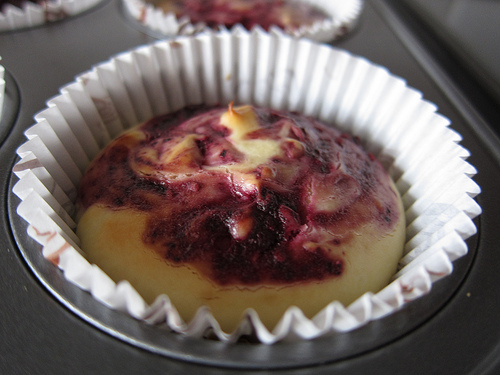
I wanted to try these mini baked Cheesecakes from Junior’s, which is a popular Cheesecake store in New York. I hadn’t used this book in a while as I dislike the sponge base, I prefer the biscuit base and most if not all of the recipes in the Junior’s Cheesecake Cookbook: 50 To-Die-For Recipes for New York-Style Cheesecake are in fact sponge based.

I made a Peanut Butter Cheesecake from this book and it turned out quite well, but wasn’t fond of the sponge cake base. I like the crunch and butteriness of the crumbed biscuits. The actual recipe calls for Raspberry puree, but I only had a packet of mixed assorted frozen berries (Raspberries, Blueberries and I think a few Black currents) but works quite well anyway. I’ve left the American measurements as is from the recipe book but added in the commonly used Australian measurements so you don’t have to!

Little Fella Raspberry Swirls

Makes 13 Little Fellas
Ingredients
6 ounces (about 2/3 cup/170g) dry-pack frozen whole raspberries (unsweetened, not in syrup) thawed and drained well
Two 8-ounce packages cream cheese (only full fat) at room temperature (Roughly 450g)
2/3 cup sugar (I reduced it to 1/2 cup)
3 tablespoons cornstarch
1 tablespoon pure vanilla extract
2 extra-large eggs
1/2 cup heavy or whipping cream
13 fresh raspberries (large, pretty ones) (I didn’t have any of these at the time)

Method
1. Preheat the oven to 350 F (176 C). Line 13 standard muffin cups with silicone, foil, parchment or paper lines. (If you have only 12, use a custard cup for the thirteenth one)

2. Pulse the thawed raspberries in your food processor until smooth (you need 1/3 cup of puree). Set aside.

3. Put one package of the cream cheese, 1/3 cup of sugar, and the cornstarch in a large bowl. Beat with an electric mixer on low until creamy, about 3 minutes, scraping down the bowl a few times. Blend in the remaining package of cream cheese. Increase the mixer seed to medium and beat in the remaining 1/3 cup sugar, then the vanilla. Blend in the eggs, one at a time, beating well after adding each one. Beat in the cream just until it’s completely blended. Be careful not to overmix!

IMG_6477

4. Divide the batter among the 13 muffin cups (fill each one almost up to the top). Drop a heaping teaspoon of the raspberry puree in the centre of each cup, pushing it down slightly into each little cake as you go. Using a thin, pointed knife, cut through the batter a few times, just until the raspberry swirls appear (do not mix in the puree completely or the cakes will turn pink and the swirls will disappear).

5. Place the muffin tin in a large shallow pan and pour hot water in until it comes about 1 inch (2.54cm) up the sides of the tin. Bake the cakes until set and the centres are slightly puffy and golden with red raspberry swirls, about 45 minutes. Remove the cakes from the water bath, transfer the tin to a wire rack and let cool for 2 hours. Cover the cakes with a plastic wrap (do not remove from the tin) and put in the freezer until cold, at least 1 hour.

IMG_6495

6. To remove the cakes, lift them out the cups with your hands ad peel off the liners. Place the cakes, top side up, on a serving platter or individual dessert plates. Top each with a raspberry and refrigerate until ready to serve. If there are any cakes left, cover with plastic wrap and store in the refrigerator. Or remove the fresh berries, then wrap and freeze for up to 1 month.

IMG_6496
Impressions

I like this recipe but it sure does take a seemingly long time to get any results.

Letting these babies cool for 2 hours felt like forever since I did it at night, and waiting another 1 hour in the freezer before placing it in the refrigerator for storage. So really what seemed like a short prep time, the waiting can be excruciating if you really had a cheesecake craving that night.

The water bath is a bit troublesome if you’ve never done it before. I also probably didn’t have a high enough pan to place my muffin trays on in order for the water to be high enough to reach 2.5 cm. Mine was probably around 1.5cm at most. So I have a feeling I may have over baked it, as I did leave it in the oven too long.

For that haven’t tried a well done one, you’d still be hard pressed to see any faults. Apart from the sullen appearance. You still get a nice cream cheese flavour, along with a touch of berry flavour. I wish I added more puree to be honest, or maybe my frozen berries weren’t very flavourful so I’ll give it another shot and see how those turn out. Overall, it’s a good recipe, I enjoyed the end results even though I know it wasn’t at all perfect (or even close). It doesn’t have a sponge or biscuit base at all. It’s more like a cheesecake muffin so if the the base is something you can’t live without you could probably add a biscuit base to a separate muffin tray (paper), let it set in the fridge and then once the cheesecakes are cooled, peel it off (if you put it in cups) and just place it on top of the base. I’m sure it’ll add a nice crunchy texture to it all.

Pandan Chiffon Cake

IMG_5873

Chiffon Cake was invented in America but have remained popular in South-East Asian countries, and extremely popular in Malaysia. The most popular versions are Orange or Pandan/Coconut Chiffon Cakes and are enjoyed by many for its light and fluffy texture. Here is a version of my Pandan Chiffon Cake. Chiffon Cakes sometimes take a couple of tries to get right due to different oven temperatures and the mixing of the meringue and wet mixture so if you don’t succeed on your first try. Please try again!

Pandan Chiffon Cake
Ingredients

7 egg whites
100 g sugar
1/2 tsp cream of tartar

7 egg yolks
60 g sugar

190 g flour
1/2 tsp salt
2 tsp baking powder

80ml vegetable oil
140ml coconut milk
1/2 tsp pandan extract

Method
1. Preheat oven to 160/170 degrees Celsius.
2. Sieve the flour, salt and baking powder into a medium sized bowl.
3. Add the vegetable oil, coconut milk, extract, egg yolks and sugar into the dry ingredients and mix until just combined.
IMG_5851
4. Whip the egg whites and once it starts to bubble add the cream of tartar.
5. Keep whipping until the mixture is nearing soft peaks, then slowly add the sugar with the electric mixer is still running and until hard peaks form.
IMG_5855
6. Add 1/3 of the meringue into the wet mixture until the thick mixture softens. Then slowly add in the rest of the meringue until just combined. Do not overmix!
7. Pour into the cake pan (one made for upside down cakes – it has a hole in the middle)
8. Place in the oven for 30/40 minutes. If the top of your cake gets brown too quickly, lower the oven temperature to around 150. To see if it’s done, you can use a skewer and poke it through the middle. If it comes out clean, it’s done.
9. Remove from the oven when done, and flip it upside. If the cake as risen higher than the cake pan’s height, use a mug and rest the middle cylinder on top.
IMG_5871
10. Allow the cake to cool until room temperature.

IMG_5878

Impressions
What I like about this recipe is how light the chiffon cake is. When you take a bite, the cake just melts in your mouth. Not to inflate my ego or anything but I found it better than those purchased in my local Asian Grocers. This recipe isn’t too sweet, but still has that nice and subtle pandan flavour. You can always increase or decrease the amount of pandan extract you put it, as well as the coconut to whatever you prefer. That’s the fun thing about making things yourself, you can make something just to your liking.

If your chiffon cakes sinks slightly when cooling, that’s fine. All cakes shrink slightly when cooled. If your cake shrinks too much, this may be a result of over mixing for the batter or the meringue. Or even under mixing for the meringue.

IMG_5884

I find that if you use a good stand mixer, it’s much easier to make the meringue and definitely more consistent than using a hand held mixer. It’s also less troublesome to try pouring sugar into the egg whites if you use a stand mixer (I know, I’ve tried)

All in all, Chiffon cakes can be slightly difficult but once you get the basics down, you’ll find it isn’t so hard after all.

Green Tea Mochi with Red Bean and Black Sesame

IMG_6912

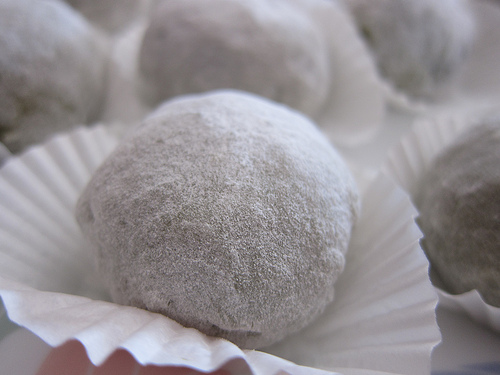
Mochi is a Japanese treat that is made from glutinous rice flour and is usually slightly chewy and soft with an assortment of fillings inside. In most offerings, red bean paste is used. Although more commonly known as a Japanese food, it is known to be popular in other Asian countries with their own twists or variances.

What goes best with red bean? Grean Tea.

I’ve adapted this recipe from Belachan2 and have made my usual  changes to the recipe to suit my own tastes.

Green Tea Mochi with Red Bean Filling
Ingredients
1 cup glutinous rice flour
1/2 tsp. green tea powder (for baking)
150ml water
1 tbs sugar

Red bean paste for filling (Recipe below)
Black sesame paste for filling (Recipe below)

Cornstarch for dusting (microwave cornstarch for 2 mins, let it cool completely before using) – Or you can light heat up the glutinous rice flour in a pan for a couple of minutes (don’t burn) and let it cool to room temperature.

Method

1. In a glass bowl, combine flour, green tea powder and water. Stir to mix well. Then add in the sugar, stir til sugar dissolved.

2. Cover with a plastic wrap and microwave for 2 minutes. Remove and stir well. Return to microwave for another 30 seconds. Stir-well and check for doneness. If not, put it back for another 30 seconds, be careful not to burn it.

3. Flour the working surface with cornstarch and use a spoon to drop a ball of mochi on top and quickly cover it with starch. Divide into 8 or 10 pieces. Wrap the filling inside and cover with more cornstarch. Shape into balls and ready to serve.
IMG_6911

Red Bean Paste (From JustHungry)

Ingredients
2 cups washed azuki beans
3/4 to 1 cup sugar
1/2 tsp sea salt

Method
1. Soak the beans in cold water to cover for 24 hours.

2. Drain the beans and put them in a pot with water to cover. Bring the water to a boil, boil for a minute then drain the beans. Rinse the beans briefly under cold running water and drain again. Put the beans back in the pot with fresh cold water, bring to a boil, then drain and rinse again. This twice-boiling gets rid of much of the surface impurities and makes the an taste cleaner.

3. Put the beans back in the rinsed pot, and add enough water so that it comes up to about 2cm/1 inch above the beans. Bring to a boil, then lower the heat to a low simmer. Add water if it boils away. Skim off any scum on the surface. Cook until the beans are completely cooked and falling apart. Drain the beans, reserving the cooking liquid.

4. Put the pot of beans back on medium-low heat. Add the sugar and salt in 3-4 batches, while stirring with a wooden spoon or spatula to distribute the sugar and salt evenly. When the sugar melts, it will exude moisture, but if it seems a bit too dry or sticking to the pot, add a little of the reserved cooking liquid back in. Continue cooking while stirring occasiontaly, until the sugar is completely melted and absorbed into the beans. This step takes 10-15 minutes.

5. At this point the beans should be soft enough to mash easily with the side of your spatula. You can also use a potato mssher. Turn out onto a plate to let cool.

Rice Cooker Method (not exact)

1. Add around 250g washed azuki beans into a rice cooker
2. Fill the bowl with water until it covers all the beans
3. Let it cook in there for a couple of hours or until the beans start to soften
4. In the middle of cooking in the rice cooker, add sugar (up to you) and add a a couple of pandan leaves for flavour.
5. Once the beans are soft, you can either mash them together with a cooking utensil until smooth. If you want a really fine paste, you’ll probably need to put it through a sieve a couple of items or try a food processor.

Black Sesame Paste (Not exact)
Ingredients
100 g Black Sesame Powder
2 tbs Icing Sugar
1 tbs Butter/Margarine (Soft)

Method

1. Add all the ingredients together, you can use a whisk or a fork to mix until it forms a paste.
2. If it doesn’t mix properly, add slightly more margarine/butter and mix. Similarly, if it isn’t sweet enough for your liking, add more until it suits you.

Impressions

This recipe is fantastic if you like soft and slightly chewy Mochi but my first warning is if you cannot eat them all in the day (how can you not?) then it usually hardens overnight. There are a few recipes that won’t do this but I find them to be more dense and tougher to eat.

My second warning is that, the rice ball after heated up is extremely sticky. So add the flour to your hands, and on the plate/table. You’ll get the hang of it after a couple of tries but flour up each time as otherwise it can be a total disaster when you try putting in the filling. You can always eat the disasters so that’s a plus anyway. This is always my go to recipe and although I said it was tricky, it is a very simple process.

Mochi’s are like the Macarons of the East. The filling and the rice ball is all up to you! Enjoy!

Banana Cake

IMG_6956

Ba-na-na-na-na-na-na-na-nana-na. Make those bodies sing. I’m so glad bananas have dramatically dropped in price and no longer cost at least $10. Rejoice! To celebrate the comeback of Australian Banana’s here is a recipe for those with extra ripe bananas and don’t know what to do with them. It’s a quick and easy recipe, and very difficult to get wrong.

Banana Cake

Ingredients
8 ounces (228 grams) self raising flour
2 tablespoons plain flour
1-2 tsps baking soda
1/2 tsp salt

3.5 ounces (100 grams) caster sugar
5 ounces (142 grams) butter/cooking margarine (6/7 ounces, you probably will get a slightly more moist cake)
1 tsp vanilla extract
4 eggs (at room temperature)

1-2 ripe bananas (mashed)
1/2 cup chopped walnuts (optional)

Method
1. Preheat oven to 180 C. Sift the self raising flour, plain flour, baking soda and salt and leave aside.
2. Cream the butter and sugar until light. You can add the vanilla extract when whisking or afterwards, it doesn’t really matter too much.
3. Add each egg one at a time until all is mixed through well.
4. Combine the sifted dry ingredients slowly to the wet batter.
5. Add the bananas and walnuts to the mixture and it’s done!.
6. Place the batter into muffin/cupcake pans. Then place in oven for 15-20 minutes/ until golden brown (or when the skewer comes out clean)

IMG_6957

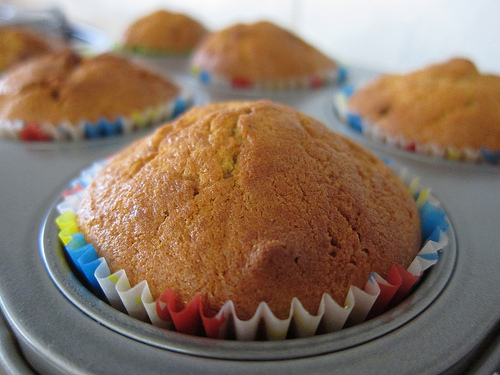
I like this recipe, since you can adjust the sugar, butter to your liking. The banana adds to the sweetness so you don’t really need that much extra sugar to be honest. The banana makes the mixture quite wet, so you may need to add extra baking powder so that it rises properly and doesn’t sink afterwards! I’ll keep trying to find the perfect banana cake recipe.

Homemade Sauté Apple Tart

IMG_6686

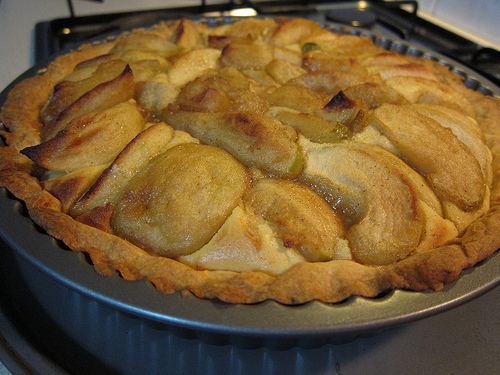
This Apple Tart is really quite delicious, I’ve taken it from this recipe book called Patisserie by Leonard J Hanneman. The shortcrust pastry is actually quite easy to make and comes out great too. The recipe is broken into three parts but all are manageable and not out of anyone’s experience.  I recommend baking the shortcrust pastry first, then Apple Saute, and lastly the almond filling because the filling doesn’t require it to be cooled to room temperature.

Checkout the recipe I’ve used below: (The changes I made to the recipe are in brackets and italics)

Sweet Shortcrust Dough (123 Pastry)
Yield: 650 g pastry

Ingredients
200 g unsalted butter
100 g caster sugar (50 g sugar)
50 g egg (1 x 55 g egg)
300 g plain flour
pinch of salt

Method
1. Cream the butter and sugar lightly, using the paddle attachment.
2. Add the egg and continue creaming until absorbed.
3. Carefully fold in the flour and salt, mixing only until combined. The dough will be very sticky, and more like a biscuit paste. Wrap in plastic and chill prior to use.
4. Cut the chilled dough into manageable sized pieces, knead lightly first to soften, then roll out using dusting flour.

How to Blind Bake
1. Take a chilled pastry case. For a quicker chill, the freezer works wonders.
2. Place a piece of non-stick baking paper into the pastry case, then line it with foil, pressing the foil flush with the base of the pastry case and up the sides.
3. Fill with baking weights of beans, ensuring that the weights press up along the sides to support the walls. There can be fewer weights over the centre of the pastry. It is important to have sufficient weights to support the sides as it is the sides that will slump as the pastry heats during the baking process.
4. Blind bake the pastry at 170°C for 30 to 60 minutes depending on the thickness and the size of the cases.

IMG_6696

Here is the apple tart recipe below (and a slice of the tart above):

Sauté Apple Tart

Yield: 1 x 28 cm tart lined with 123 pastry, prebaked

Ingredients
6 apples, Granny Smith or Golden Delicious
60 g unsalted butter (Cooking margarine)
1 x 28 x 2cm or 2 x 16 x 2cm tart cases lined with sweet shortcrust and blind baked
1 vanilla bean, split and scraped or 1 teaspoon of cinnamon (1/2 tsp cinnamon and 1/2 tsp of vanilla extract)
60 g sugar (30 g sugar)
almond filling (below)

Method
1. Peel and core the apples; cut into 8 wedges
2. Melt the unsalted butter and add the vanilla pod (or cinnamon). Over high heat saute the apples in the butter and sprinkle over the sugar. Toss as they cook to a golden brown, though still firm. Do not overcook. Set aside to cool.

Almond Filling

Ingredients
80 g unsalted butter
60 g sugar (30 g)
120 g almond meal
100 g egg (2 x 55 g eggs)

Method
1. Cream the butter, sugar and almond meal, add the eggs and continue mixing until absorbed and the mixture is light and pale.
2. Spread the almond filling into the pre-baked and cold shortcrust shell/s.
3. Nestle the cool saute apples into the almond filling, wedges facing upward rather than fanned, to create height.
4. Bake at 170C for 50 minutes. Serve hot or at room temperature.

Impressions

I like this recipe because the shortcrust is nicely short and has a nice bite to it but overall it melts in your mouth like it should. The almond meal adds this grainy texture to the overall tart, however if you don’t like this more ‘whole wheat’ kinda taste then you can try food processing the almond meal a few times, and maybe sieve it as well so it comes out much finer.

Overall it’s a good recipe that is easy enough to make, the only trouble you may have is with rolling out the pastry dough in a warm environment. It can get soft and unmanageable very easily. So if it does become too soft when you start rolling it flat and trying to place it into the case, either place it in the fridge or freezer to let it harden up a bit and try again.

Whole Wheat Ginger Snaps

DSC00160

Ginger snaps or even ginger cookies are one of my favourite little treats. It’s quite funny though since I have a strong dislike for ginger in general, whether it’s raw, in a stir fry, congee, steamed fish etc. I found this recipe on Allrecipes.com a few Christmas’s ago and have made it a couple times now and I like it because it feels ‘healthier’ even though wholemeal/wheat flour isn’t really all that much better for you considering the other ingredients in these cookies. I’ve made a few changes as I didn’t have a few of the ingredients and to make it less sugary sweet.

Whole Wheat Ginger Snaps (Allrecipes)

Prep Time: 10 Minutes

Cook Time: 15 Minutes

Makes: 5 dozen (60 cookies)

Ingredients

1 cup butter or margarine (Slightly less)
3/4 cup white sugar (Caster sugar)
2 eggs, beaten
1 cup molasses (Slightly less)
4 cups whole wheat flour (Wholemeal flour)
1/2 tablespoon baking soda
2 teaspoons baking powder
1 tablespoon ground ginger
1 1/2 teaspoons ground cinnamon
Extra sugar for the topping


Method

1. Preheat the oven to 175 degrees Celsius. Grease cookie sheets.

2. In a large bowl, cream together the butter and 1 1/2 cups of sugar until smooth. Mix in the eggs, and then the molasses. Combine the whole wheat flour, baking soda, baking powder, ginger, and  cinnamon. Stir the dry ingredients into the molasses mixture just until blended.

3. Roll the dough into small balls, and dip the top of each ball into the remaining white sugar. Place the cookies about 2 inches apart on the cookie sheets.

4. Bake for 10 to 15 minutes in the preheated oven, until the tops are cracked. Bake longer for crispy cookies, less time for chewy cookies. Cool on wire racks.


Impressions:

I like this recipe because these cookies are nice and crunchy and you get a nice cinnamon and ginger taste that isn’t particularly overpowering. These cookies aren’t like your usual ginger snaps that are wafer thin and ‘melts-in-the-mouth’ since it doesn’t contain icing sugar and it has wholemeal flour for that grainy texture.

Just a warning though, the cookie dough is extremely sticky because of the molasses so it’s quite difficult to shape but somehow they all turned out round.

Homemade Pizza

IMG_6652

One of things I’ve realised from making a nice tasty homemade pizza is that it doesn’t really come cheap! Unless you make huge batches it won’t necessarily be budget friendly but of course this depends on the ingredients you use. On the plus side these pizzas were worlds apart from the fast food pizzas such as Dominos. They really can’t compare to a homemade pizza at all.

IMG_6641

I’ve taken this recipe from Jamie Oliver‘s website, which I believe is in the Jamie At Home cookbook, and I have now made pizza a couple of times with this recipe so for me, it works quite well, and is very easy to do. Here is the recipe I’ve used below.

Makes 6 to 8 medium-sized thin pizza bases

Ingredients

1kg strong white bread flour or Tipo ‘00’ flour
or 800g strong white bread flour or Tipo ‘00’ flour, plus 200g finely ground semolina flour
1 level tablespoon fine sea salt
2 x 7g sachets of dried yeast
1 tablespoon golden caster sugar
4 tablespoons extra virgin olive oil
650ml lukewarm water

Method

1. Sieve the flour/s and salt on to a clean work surface and make a well in the middle.

2. In a jug, mix the yeast, sugar and olive oil into the water and leave for a few minutes, then pour into the well. Using a fork, bring the flour in gradually from the sides and swirl it into the liquid. Keep mixing, drawing larger amounts of flour in, and when it all starts to come together, work the rest of the flour in with your clean, flour-dusted hands. Knead until you have a smooth, springy dough.

3. Place the ball of dough in a large flour-dusted bowl and flour the top of it. Cover the bowl with a damp cloth and place in a warm room for about an hour until the dough has doubled in size.

4. Now remove the dough to a flour-dusted surface and knead it around a bit to push the air out with your hands – this is called knocking back the dough. You can either use it immediately, or keep it, wrapped in clingfilm, in the fridge (or freezer) until required. If using straight away, divide the dough up into as many little balls as you want to make pizzas – this amount of dough is enough to make about six to eight medium pizzas.

5. Timing-wise, it’s a good idea to roll the pizzas out about 15 to 20 minutes before you want to cook them. Don’t roll them out and leave them hanging around for a few hours, though – if you are working in advance like this it’s better to leave your dough, covered with clingfilm, in the fridge. However, if you want to get them rolled out so there’s one less thing to do when your guests are round, simply roll the dough out into rough circles, about 0.5cm thick, and place them on slightly larger pieces of olive-oil-rubbed and flour-dusted tinfoil. You can then stack the pizzas, cover them with clingfilm, and pop them into the fridge. (I made the doughs in the morning and let them sit in a warm area for most of the day so it could rise to it’s maximum size)

IMG_6642

With these pizzas the toppings are all up to you and the beauty of it all is you can add as little or as much as your want!

I halved the above recipe and used semolina and it made two large(ish) sized pizzas so you can take that into consideration. I’ve listed the ingredients I’ve used below.

Pizza Tomato Base (I’ve used Leggos, but anything is fine)
Capsicum
Mushroom
Jalapenos (From Woolworths are absolutely amazing on a pizza – be warned though they are not that cheap!)
Pizza Cheese (Cheddar/Mozarella mix)
Chorizo
Pancetta
Hot Salami

Here is a recipe from Taste.com.au which you can use to go by for oven temperature and general how to.

Cooking Time
20 minutes

Ingredients (serves 4)

4 pita pockets
2 tbs tomato tapenade (see note)
125g chorizo sausage, thinly sliced
60g (1/3 cup) bought roasted capsicum, drained, thinly sliced
100g baby bocconcini, drained, halved
40g (1/2 cup) shredded parmesan
50g baby rocket leaves

Method

1. Preheat oven to 200°C.

2. Place the pita pockets on a large baking tray. Spread with the tomato tapenade. Top with the chorizo, capsicum and bocconcini. Sprinkle with the parmesan.
3. Bake in oven for 10 minutes or until the parmesan melts and the base is light brown and crisp.

Notes
If tomato tapenade is unavailable, use tomato paste. Shopping tip: Look for tomato tapenade and bottled roasted capsicum, sometimes called fire-roasted peeled peppers, in the antipasto section at Woolworths, near the olives. Swap it: For a different flavour, swap the tomato tapenade for bought basil pesto and swap the chorizo sausage for coarsely chopped ham slices.

IMG_6643
IMG_6647

Impressions

I really liked the Jamie Oliver pizza dough recipe, it works wonders. However to be honest, I haven’t tried any others when this one worked well for me. It has a nice crunch on the outside and it lovely and soft inside, plus if you cook it long enough the base crisps nicely and it is just fantastic.

Basically you leave it in the oven at roughly 200 degrees fan forced if you have ingredients that don’t need much cooking (or really none at all). If you do have toppings that may need to be cooked, please pre-cook them to be safe, and so the dough is well cooked while the toppings aren’t overly over cooked.

It’s a great recipe that I’ll be using more regularly from now on!

Pineapple Tarts

IMG_6557

Pineapple Tarts are one of my favourite Chinese New Year treats. That’s not to say you can’t have it any other time of year but these bite sized pieces are even more joyous in times of celebration. I’ve always loved the sweet and slightly sour pineapple filling with the buttery dough that melts in your mouth. Also these tarts come it various sizes or shapes that always makes it more appealing.

Probably every year we try those home made Pineapple Tarts sold in your typical local Asian Grocer and it’s always a tad too sweet and the tart isn’t as soft as I would have liked. So I have wanted to try to make my own tarts for ages but the thought of making the filling just seemed like too much effort.

However, It just so happened we ended up having large, old pineapples sitting around so what else could we use it for but pineapple jam? My mother was the one wh  actually  made the jam, just from adding pineapples into a pot and letting it dry up and adding sugar so I don’t know the exact quantities she used, I think just tasting as she went along and added sugar when needed. However, I’ve provided a recipe from one of my favourite Asian/Malaysian Food websites, Rasa Malaysia for the filling and pastry. We did use the pastry recipe from there and I think it worked out quite well, you can read my impressions further down.

Rasa Malaysia’s Pineapple Tart Recipe

Pineapple Filling

Ingredients:

4 large pineapples
300 g sugar
1 clove
1 inch cinnamon stick
1/2 star anise
250 g liquid glucose
2 Tbsp wheat flour or wheat starch (Tung Mein Fun)

Method:

1. Slice and grate pineapples till fine. You can use a food processor do grate it.
2. Strain the grated pineapple till dry.
3. Let it simmer in a wok toll the juice has dry up. Add sugar and, star anise, cinnamon stick and clove.
4. Stir till the pineapple has thickened and dry. Add maltose or liquid glucose.
5. Stir till the pineapple filling is thick, sticky and dry.
6. Add wheat flour. Continue to stir for about 10 minutes or until filling is dry.
7. Leave to cool and shape into small balls.

Note : You can make the filling in advance and refrigerate it.

Pastry

Ingredients:

500 g butter
140 g powdered sugar
4 egg yolks
650 g all purpose flour
1 Tbsp cornflour
2 tsp baking powder
1 tsp vanilla essence

Egg Brush

1 egg yolk plus 1Tbsp water

Method:

  1. Preheat oven at 150° C.
  2. Cream butter and sugar till white.
  3. Add in egg yolks and beat at low speed for 1 minute.
  4. Fold in flour gradually.
  5. Insert pastry into cookie press and press into strip of about 3 inch each. (Or just take a small spoonful of the pastry,  flatten it and take another spoonful of the jam and use your hands to shape it into a ball)
  6. Put the rolled pineapple filling onto the pastry and roll it up.
  7. Brush with egg brush.
  8. Bake for 30 minutes or when tarts is light golden brown in color.

IMG_6551

IMG_6556

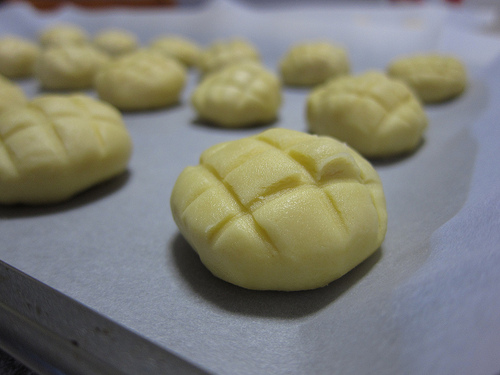
You can shape these tarts any way you want, and as mentioned in the Rasa Malaysia recipe, they roll it up like a sausage roll of sorts. We stuck to the ball method and just used a fork or a toothpick to engrave the lines on to make it look more like a pineapple.

You can also use a mold designed for these tarts and they come in various shapes like a flower or hearts. I’ve purchase one from Brown Cookie but for since this particular dough is quite soft it gets quite difficult to remove from the mold.

Impressions

The pastry recipe is surprisingly very good as just how I like it! It’s soft and simply melts in your mouth as you take a bite. I’ve actually made this a number of times since my mother had made an enormous quantity of pineapple jam.

It really does depend on how you like your pineapple tarts, some like the shortbread style tarts that are slightly harder and crisper but I’m a big fan of these softer tarts. If you’re like me and prefer these ones, this is a great recipe to try.